Getting Ready for Your Carpal Tunnel Release
This is one of the smallest surgeries we do — ultrasound-guided, through a tiny opening, usually with numbing medicine only. Most patients eat a normal breakfast, walk in, walk out, and use their hand the same day. This short class (about 10 minutes) covers the few things that actually matter.
Make it yours
Your answers change what you need to do before surgery — including whether you need to fast, and whether you need a physical with your primary provider. They stay on this device.
Where is your surgery?
What anesthesia are you planning?
Most carpal tunnel releases are done wide awake with numbing medicine — like a dental visit. If you'd rather be sedated or asleep, that's fine too; it just adds a couple of requirements. Not sure yet? We'll go over it at your visit — you can come back and change your answer.
Your requirements
Choose your anesthesia above…
Choose your location and anesthesia above…
Choose your anesthesia above…
William Bee Ririe Hospital
6 Steptoe Circle · Ely, NV 89301
(775) 289-3612
Convergence Health Surgery Center
2098 Idaho Street · Elko, NV 89801
(775) 389-5777
Memorial Hospital of Carbon County
2221 West Elm Street · Rawlins, WY 82301
(307) 324-8712
Aspen Mountain Medical Center
4401 College Drive · Rock Springs, WY 82901
(307) 352-8946
Johnson County Healthcare Center
Johnson County Healthcare Center · 497 W Lott St, Buffalo, WY 82834
(307) 684-2228
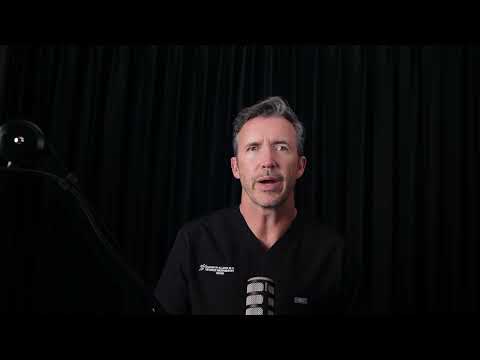
Watch: Welcome to your surgery prep class — on the web version of this guide at darinallredmd.com
What This Surgery Actually Is
Carpal tunnel syndrome is a pinched nerve at the wrist — the median nerve, squeezed under a ligament. The fix is simple: release the ligament so the nerve has room. I do this ultrasound-guided and minimally invasive: a tiny opening, the instrument guided by live imaging, no big incision to heal.
- The procedure itself takes minutes. You'll be at the facility longer than the surgery takes.
- Most patients are wide awake with numbing medicine at the wrist — you'll feel pressure, not pain. If you'd rather be sedated, tell us at your visit.
- Recovery is fast: most people are back to light activities in about 2 days and heavy activity in about 4 days — though full recovery can take a few weeks, and nighttime numbness often improves within days.
- No physical therapy needed — just move your fingers and use the hand as comfort allows.
Before Surgery
Medicines
- Prescription blood thinners (Coumadin/warfarin, Eliquis, Pradaxa, etc.): tell us at your visit — do not stop them on your own. We'll give you a specific plan.
- Stop aspirin and anti-inflammatories (ibuprofen, Aleve, naproxen) 1 week before — unless your doctor prescribed aspirin for your heart. Tylenol is fine that week.
- Stop blood-thinning supplements 1 week before: fish oil, vitamin E, garlic, ginkgo, ginseng, turmeric.
If you're choosing sedation or general anesthesia
- GLP-1 medicines (Ozempic, Wegovy, Mounjaro, Zepbound): these slow stomach emptying — a risk when you're sedated. For weight loss only: stop at least 2 weeks before. For diabetes: ask your prescriber.
- Schedule your H&P with your primary provider — required within 30 days of surgery.
The skin wash
- Buy CHG soap (chlorhexidine / Hibiclens 4%) and wash from the neck down daily starting 5 days before surgery, plus the morning of. Clean towel and clothes each time. Don't shave your arms during those days.
Small stuff that trips people up
- Rings off both hands now — swelling can make them dangerous, and we can't operate with one on.
- Wear a top with loose or short sleeves.
- Plan your driving: your hand will be numb and bandaged when you leave — bring a driver.
The Day of Surgery
With local numbing only
- Eat normally — have breakfast. There are no fasting rules with local anesthesia, and you'll feel better for it.
- Take your normal medicines as usual (minus the ones we stopped above).
With sedation or general anesthesia

Watch: The night before & morning of — on the web version of this guide at darinallredmd.com
- No solid food, gum, or mints after midnight. Clear liquids are encouraged up to 2 hours before your arrival time.
- Take your routine medicines with a small sip of water — except diabetes medicines: hold those and bring them along.
For everyone
- Morning CHG wash. No lotion on the arms.
- Arrive at your scheduled time — a nurse will call the week before with the details. Please pick up.
- Jewelry off, valuables home, driver arranged.
After Surgery — the First Week
- Dressing: if it feels too tight after an hour or two, you may unwrap and re-wrap it more comfortably. Keep it dry for 48 hours; after that, switch to Band-Aids and it may get wet — but no soaking (baths, pools, hot tubs) until healed, usually 2–3 weeks.
- Elevate your hand for the first 24 hours and keep the fingers moving. Do anything your comfort allows.
- Pain: alternate over-the-counter Tylenol and ibuprofen — one, then the other 2 hours later. Stay within the label doses. Narcotics are not needed after this procedure.
- Numbness from the local wears off over a few hours. If your hand numbness is not improving after a few days, call for an appointment.
- Back to it: light duties in about 2 days for most people; heavy activity around 4 days, up to 4 weeks for some. No physical therapy needed.
- Follow-up: most patients don't need a visit — book one around 4 weeks if you'd like us to take a look.
When to Call
Call 911 for any life-threatening emergency — chest pain, trouble breathing, fainting.
Call the office — or go to the ER after hours — for
- Increasing redness at the incision
- Pain that is uncontrolled and increasing over hours
- Uncontrolled bleeding
- Fever over 101.5°F or shaking chills
- Painful swelling
Your clinic and after-hours numbers are at the top of this class — or see every clinic's numbers on one page, worth saving to your phone before surgery. It is always better to call than to guess.
The Knowledge Check
Six quick questions. Wrong guesses are fine — you'll see the right answer on the spot. You'll get a completion code for the pre-op nurse at the end.
1. You're having local numbing only. What about breakfast on surgery day?
2. If you choose sedation instead, what changes?
3. How long does the dressing stay dry?
4. What's the pain plan after surgery?
5. What do you do with the hand the first day?
6. Which of these means “call the office”?
0 of 6 answered
Answer all 6 questions first.
Class complete.
Read this code to the pre-op nurse when she calls:
Put It on Your Calendar
Enter your surgery date — the reminders adjust to your anesthesia choice and location, including whether you need the H&P and the fasting rules.
Your prep reminders
A handful of reminders from a month out through your recovery, each with a 30-minute heads-up.
Please pick your surgery date first.
Your surgery date stays on this device — nothing is sent to us or anyone else.
Questions before surgery?
Call the clinic where you were seen — the numbers are at the top of this class.
Book an Appointment